

Watching your child grow comes with many memorable milestones, and one of the most exciting is seeing that first tiny tooth appear. From the first baby tooth to the moment the Tooth Fairy makes her final visit, your child’s dental development is an important part of their overall health.
Understanding when children’s teeth erupt and when baby teeth fall out can help parents know what to expect and recognize when something might need a dentist’s attention. In celebration of Tooth Fairy Day on February 28, let’s walk through the stages of baby teeth coming in, what teething looks like, and how permanent teeth eventually take their place.
Table of Contents
When Do Babies Get Their First Tooth?
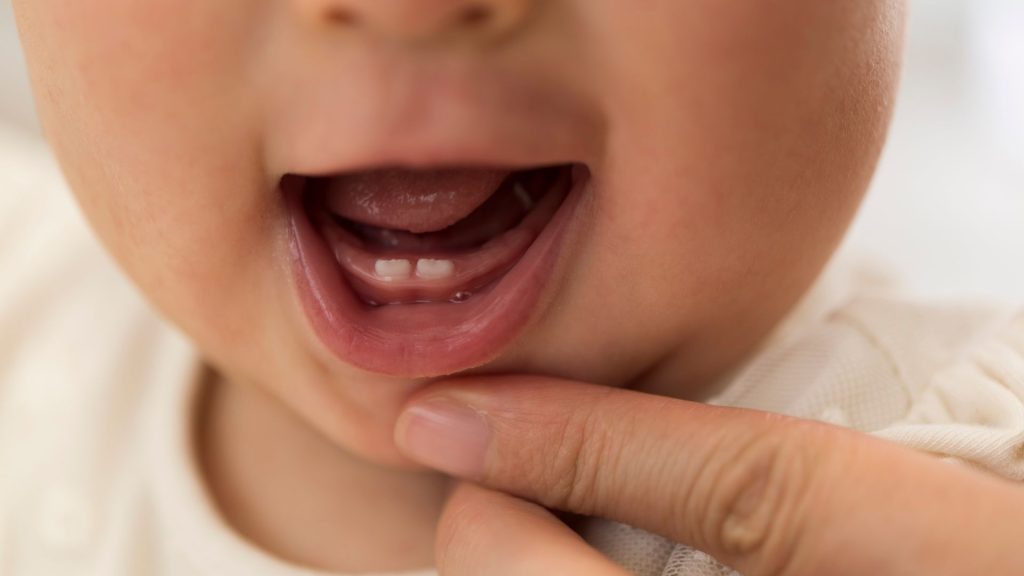
Every child develops at their own pace, so there’s a fairly wide range for when that first tooth appears. Most babies get their first tooth between six months and one year of age.
In most cases, the lower front teeth are among the first to appear. From there, the rest of the baby teeth typically follow a general timeline.
Typical Baby Tooth Eruption Timeline
- 8–12 months: Central incisors (front teeth)
- 9–13 months: Lateral incisors
- 13–19 months: First molars
- 16–22 months: Canines
- 25–33 months: Second molars
By the time your child reaches about age three, they will usually have a full set of 20 primary (baby) teeth.
Later on, around age six or seven, children develop their first permanent molars, sometimes called “six-year molars.” These teeth come in behind the baby teeth and do not replace any primary teeth, which means they are the first adult teeth to appear.
What Teething Is Like For Babies
Teething can be uncomfortable for babies as their teeth push through the gums. While the experience varies from child to child, many babies show similar signs during this stage.
Common teething symptoms include:
- Fussiness or irritability
- Increased drooling
- Skin irritation around the mouth
- Chewing or biting on objects
- Rubbing cheeks or pulling on ears
- Mild coughing due to drooling
- Loose stools or diarrhea
- A low-grade fever (typically between 37.5°C and 38.3°C)
Because some of these symptoms resemble a cold or mild illness, it can often be confusing for parents.
One key thing to remember is that teething should not cause a high fever. If your child’s temperature rises above 38°C (100.4°F), it’s best to contact your doctor, as the fever is likely related to another illness rather than teething.
How To Help Your Baby During Teething
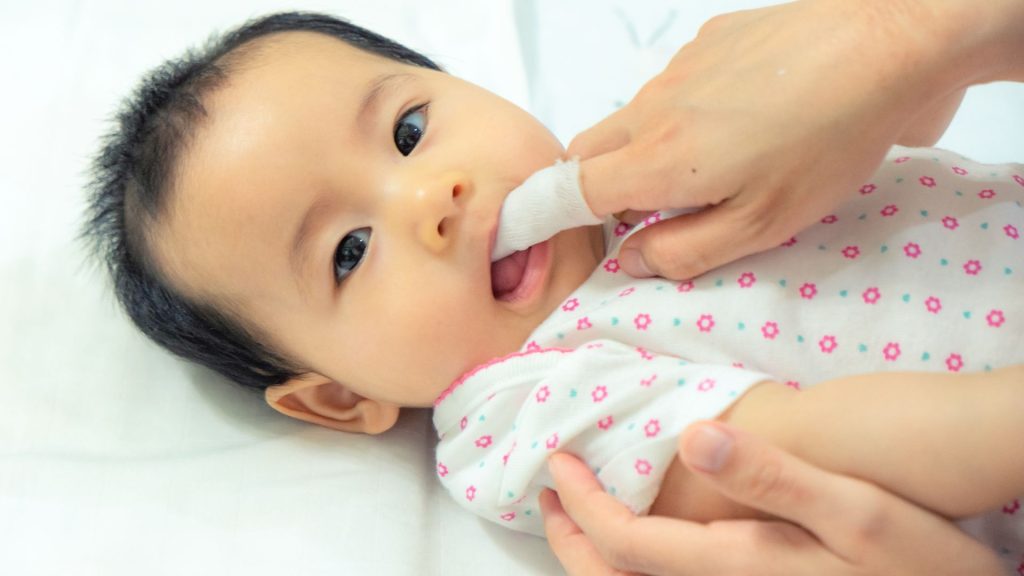
Fortunately, there are several gentle ways to help ease teething discomfort. Parents can try:
- Gently massaging the gums with a clean finger
- Applying a cool spoon to the gums for soothing relief
- Using dentist-approved teething rings
- Asking your dentist about safe pain relief options for infants
Always consult your dentist or pediatrician before using any medication to ensure it is safe for your baby.
While some people recommend teething biscuits, they are generally best avoided due to their high sugar content, which can contribute to early tooth decay.
When Do Baby Teeth Start Falling Out?
Baby teeth don’t last forever. Around age six or seven, children begin losing their primary teeth as their permanent teeth start to emerge. This happens because the roots of the baby teeth gradually dissolve, allowing the tooth to loosen and eventually fall out.
Typical Timeline For Losing Baby Teeth
- 6–7 years: First molars
- 7–9 years: Central incisors
- 8–9 years: Lateral incisors
- 10–11 years: First bicuspids
- 10–12 years: Second bicuspids
- 11–12 years: Canines
- 12–13 years: Second molars
Most children lose all of their baby teeth by their early teenage years.
Is It Okay For Kids To Wiggle Loose Teeth?
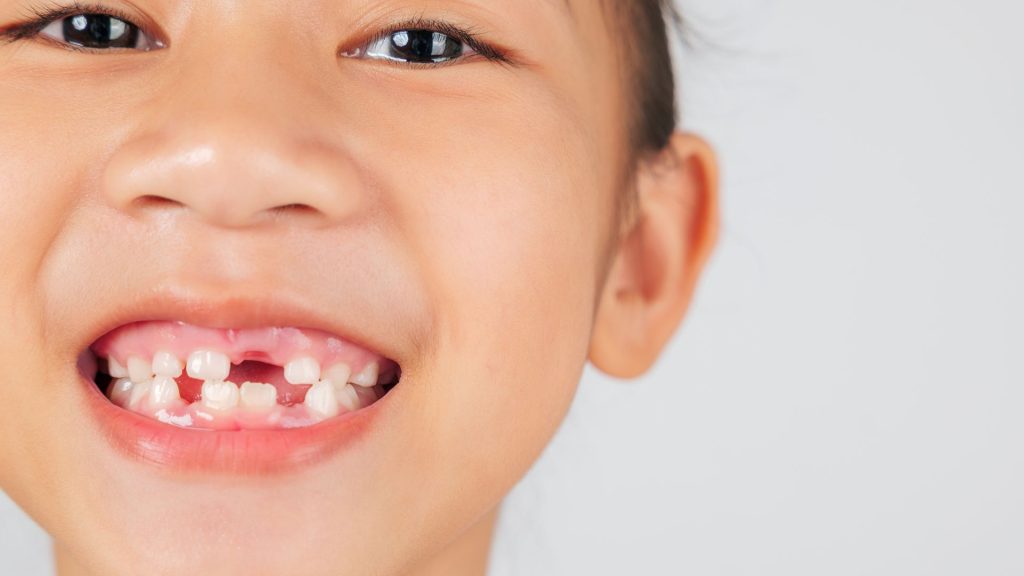
If your child has a loose tooth, they’ll probably want to wiggle it with their tongue or fingers — and that’s completely normal.
However, there are a couple of things parents should keep in mind:
- Loose teeth before age six should be checked by a dentist, as they may be caused by injury or trauma.
- Teeth should never be forced out. Pulling a tooth too early can cause pain and unnecessary bleeding.
Usually, the tooth will fall out naturally when it’s ready.
What Happens When A Child Loses A Tooth?
When baby teeth fall out naturally, the process is typically smooth and not very painful. Bleeding is usually minimal and stops quickly. However, if your child experiences significant pain or heavy bleeding, it’s best to contact your dentist.
Parents may also notice that the new permanent tooth looks slightly yellow compared to the baby teeth. This is completely normal. Permanent teeth have a thicker layer of dentin, which gives them a slightly darker shade.
If the tooth appears unusually discoloured, it’s worth mentioning to your dentist. In some cases, tooth discolouration may be linked to medication use or past trauma to the baby tooth.
Signs There May Be Tooth Eruption Problems
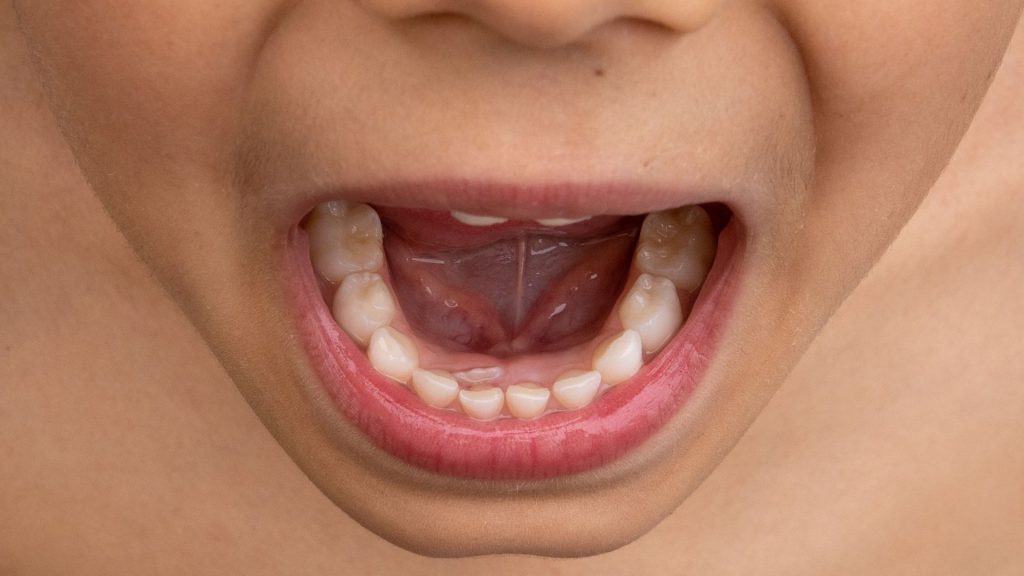
While most children’s teeth develop without issues, sometimes the eruption process doesn’t follow the expected pattern. Here are some situations where a dental visit may be helpful.
No Baby Teeth By Age One
If your child hasn’t developed any baby teeth by their first birthday, it’s a good idea to consult your dentist. In some cases, missing baby teeth can indicate a developmental condition affecting both primary and permanent teeth. Your dentist may recommend X-rays to evaluate what’s happening below the gums.
Baby Teeth Aren’t Falling Out
If your child hasn’t lost their first tooth by age seven, your dentist may want to investigate. Sometimes the baby tooth’s root doesn’t dissolve properly, preventing it from loosening. X-rays can confirm whether a permanent tooth is present underneath. If no adult tooth exists, the baby tooth may simply be left in place.
Ankylosis
Ankylosis occurs when a baby tooth becomes fused to the jawbone, preventing the permanent tooth from erupting. In these cases, the baby tooth may need to be removed so the adult tooth can grow in correctly.
Over-Retention
Sometimes permanent teeth begin emerging behind baby teeth that haven’t fallen out yet. This situation is known as over-retention. Often the baby tooth will eventually fall out on its own, but if the adult tooth is already about 75% erupted, the dentist may recommend removing the baby tooth.
Impacted Teeth
Impacted teeth occur when something blocks a tooth from emerging properly or when the tooth grows at an unusual angle. Although this issue is most common with wisdom teeth, it can also affect other teeth. Your dentist will determine the best solution, which may include extraction or other treatments.
Ectopic Eruption
Ectopic eruption happens when a tooth grows in the wrong position. This is most often seen with upper canines, first molars, or lower jaw teeth. Sometimes the tooth will correct its position naturally. If it doesn’t, your dentist may recommend treatment to guide the tooth into the proper place.
Supporting Your Child’s Dental Development
Every child’s dental journey is unique. While eruption and tooth loss usually follow a predictable timeline, small variations are completely normal. Understanding how children’s teeth erupt and fall out helps parents feel confident about what to expect and when to seek guidance.
If something about your child’s dental development seems unusual, or if you simply want reassurance, your dentist is always the best person to ask. With regular dental visits and good oral care habits, you can help ensure your child’s smile stays healthy, from their very first tooth to their very last baby tooth visit from the Tooth Fairy.
If you have questions or concerns about your child’s dental development, don’t hesitate to give us a call. Often a simple assessment can put your mind at ease.